
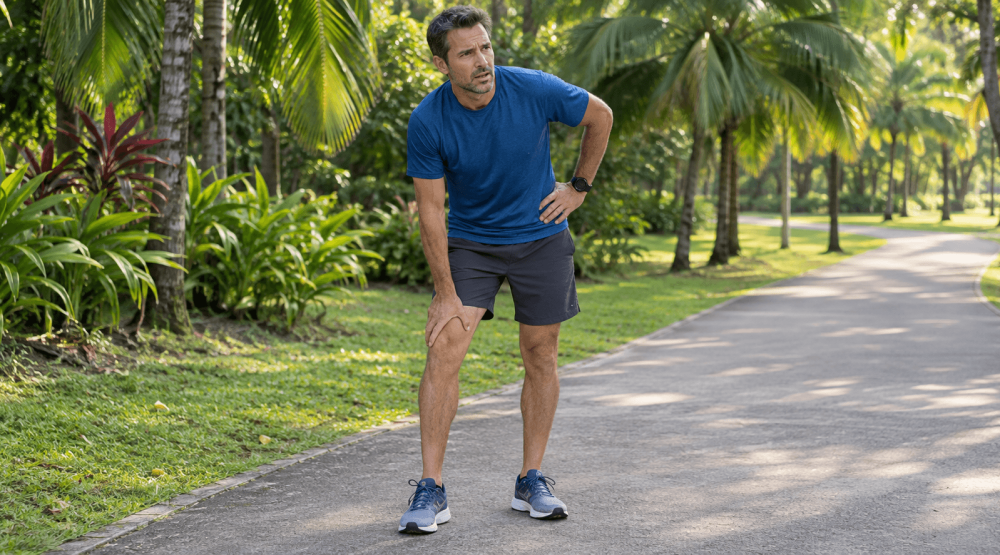
You finish a run, cool down and notice an ache around your knee. Or the knee feels comfortable during the workout but hurts later on the stairs. Knee pain after running can have several explanations. Your next step is to pause painful running, check for warning signs and consider what changed before the symptoms began.
You do not need to identify the exact injury yourself. For runners in Jupiter, Florida, a useful assessment connects the symptoms with your recent training and the activities you want to return to.
First, Decide Whether You Need Prompt Medical Care
Seek urgent medical assessment if your knee is very painful, you cannot move it or bear weight, it is badly swollen or misshapen, or it locks or gives way. A hot, red knee with fever or feeling unwell also needs urgent attention. These warning signs are outlined in the NHS knee-pain guidance.
A twist, fall or sudden pop with a change in function deserves a different response from a mild ache that developed gradually. Do not use another run to test a potentially injured knee.
Should You Run Again Tomorrow?
If running is painful, pause it rather than pushing through your planned mileage. The NHS guidance on running injuries recommends stopping painful running and getting non-severe knee pain assessed if it has not settled after a week. Seek help sooner for swelling, severe symptoms or difficulty with normal activities.
Taking a break from running does not automatically mean every form of activity is off limits. Ask a clinician which alternatives are suitable for your symptoms. Avoid replacing the missed run with another workout that provokes the same pain.
Why Might Your Knee Hurt After a Run?
Pain Around or Behind the Kneecap
Patellofemoral pain, often called runner’s knee, can involve discomfort around the kneecap during activities such as running, squatting or stairs. Changes in training frequency, distance or intensity may be relevant. The AAOS explanation of patellofemoral pain describes these possible contributors.
Pain Below the Kneecap or After an Injury
Discomfort between the kneecap and shin can involve a tendon, particularly with repeated running or jumping. Pain after a twist may involve other structures. Arthritis and other conditions can also cause knee symptoms. The timing of pain alone does not distinguish them.
If stairs are a particular problem after your run, our article about knee pain going down stairs explores that symptom in more detail.
Review Your Recent Training Before Changing Everything
Bring a simple account of the last few weeks to your appointment. You do not need a perfect training spreadsheet. Useful details include:
- How many days you ran and how long each run lasted.
- Whether you added faster sessions, hills or longer distances.
- Any change in shoes, running surface or other workouts.
- When the pain appears and how long it remains afterward.
- Whether walking, stairs or getting up from a chair also hurt.
For example, “I added a second fast session, and now my knee aches later that day” gives a clearer starting point than “running is bad for my knees.” It does not prove the cause, but it helps guide the conversation. Avoid changing your shoes, stride and exercise routine all at once without a reason for each change.
What Can Physical Therapy Address?
Prime’s knee rehabilitation begins with your history, symptoms and goals. Assessment may include knee movement, leg strength and relevant tasks, with hip and ankle function considered when appropriate. Treatment can include exercises, movement work and manual therapy based on the findings.
Ask what you can maintain while symptoms settle, what should improve before you resume running and how to respond if pain returns. A plan should be specific enough that you know what to do between visits.
Make the Return About Readiness, Not a Deadline
The appropriate return depends on the cause and severity of your symptoms. A race date should not be the only reason to resume training. Prime’s return-to-sport rehabilitation can help connect recovery with running demands. Discuss a manageable starting point and how your response will guide progression.
Help With Running-Related Knee Pain in Jupiter, FL
If knee pain keeps returning or is changing your daily routine, contact Prime Sports Performance & Therapy to request an assessment. Bring your training history and goals so your rehabilitation plan can address what matters to you.